Yes.
An automatic car wash damages paint, and I would rather say that plainly than dance around it. The part most people have not heard is that the touchless wash they switched to for safety has a problem of its own.
Here is what actually happens to your paint in there.
What Automatic Car Wash Damage Looks Like
The main thing is swirl marks. You will also hear them called spiderwebbing or holograms, and once you know what to look for you will see them on half the vehicles in any parking lot on a sunny day.
They are not one scratch. They are thousands of tiny ones going every direction, and in direct sun they catch light in a circular pattern around the reflection. On black paint they are obvious. On silver and white you can go years without noticing.
The second kind of damage is chemical. Tunnel washes have to clean a filthy vehicle in about four minutes with no one paying attention to it, and the chemistry gets aggressive to make that happen.
Which brings up the thing people get wrong.
Touchless Is Safer. It Is Not Safe.
A lot of folks think that if they go touchless, they are completely in the clear. Nothing is touching the paint, so nothing can scratch it.
Touchless is genuinely the better of the two. I will give it that. But a touchless wash only has two ways to go, and neither one is great.
It either does not clean very well, because nothing is making contact and contact is what removes bonded road film. Or it compensates with very harsh chemicals to do the heavy lifting instead. Getting a visibly clean car with no physical contact takes something strong, and that something is sitting on your clear coat, your trim, and your wheels.
So use them sparingly. Safer than the spinning brushes is not the same as harmless.
Can It Be Fixed?
Most of it, yes. But there is a point of no return, and where that point sits depends entirely on how much abuse the paint has already taken.
Light swirls on a nearly new vehicle usually come out in one step. That is the easy case.
The hard case is the unlimited wash plan. Somebody runs their truck through every other day because they are paying for it monthly anyway. Do the arithmetic on that. Every other day for two years is well over three hundred trips through the same brushes. At that point one step is not getting you to perfection, and getting close takes multiple stages of correction, which is more time and more money.
This is machine work, always. Never by hand. It is the first stage of every coating we do in the shop, and how heavy that stage needs to be is the single biggest thing that moves a quote up or down.
I should be straight about the ceiling here too. Not every mark comes out. Some sit deep enough that chasing them would take off more clear coat than is safe, and I would rather leave a flaw in the paint than take a vehicle somewhere it cannot come back from.
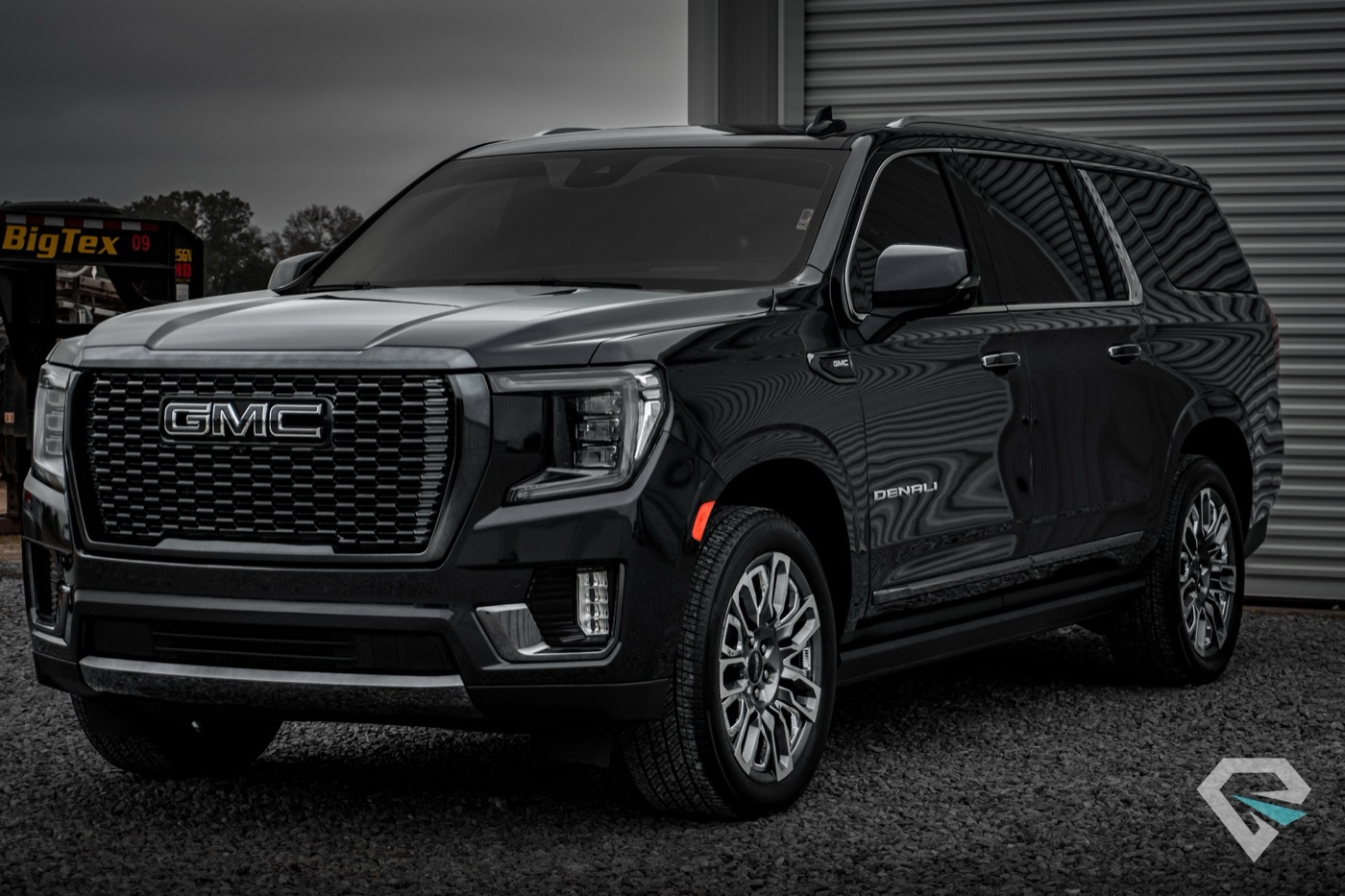
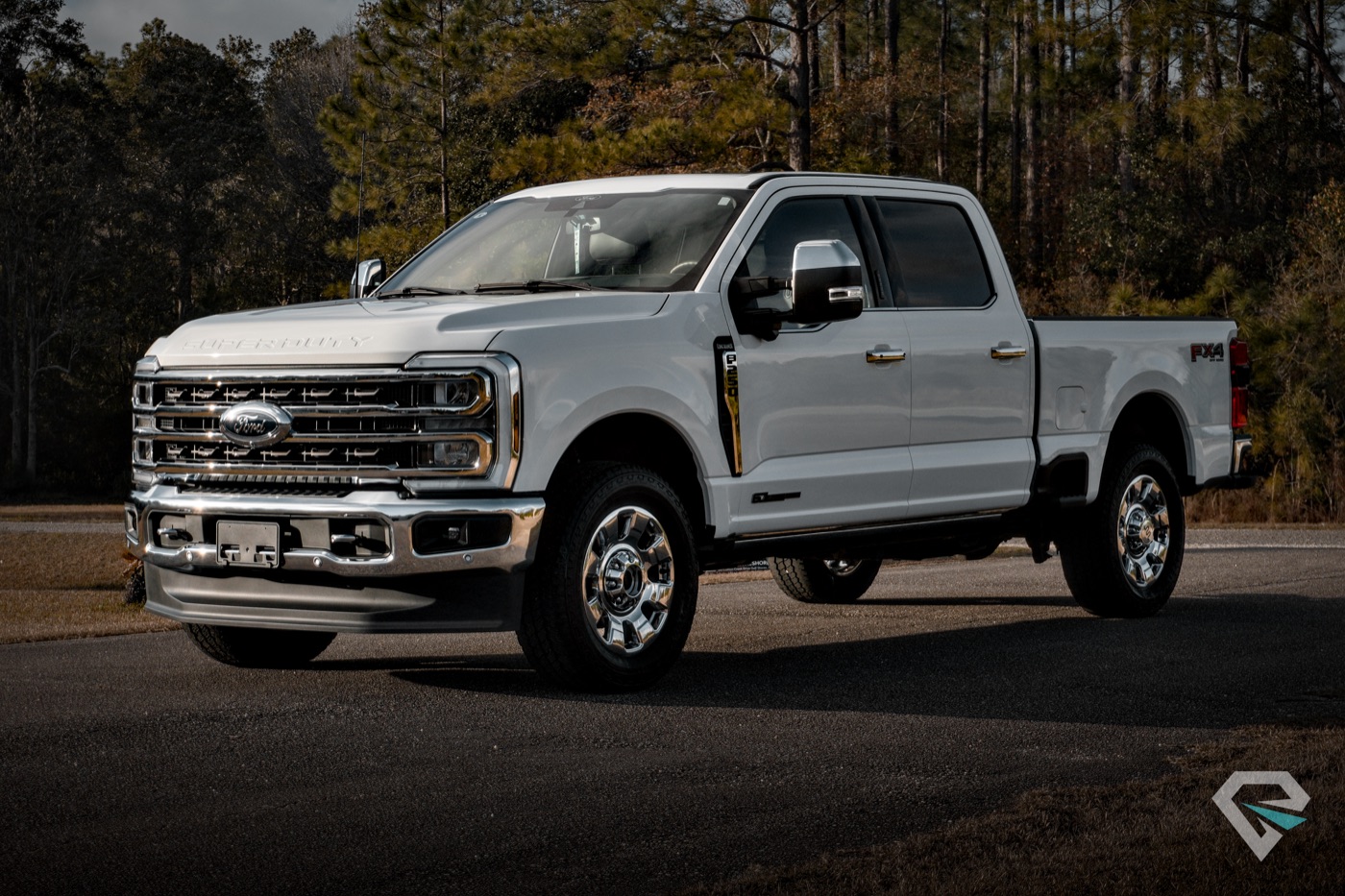
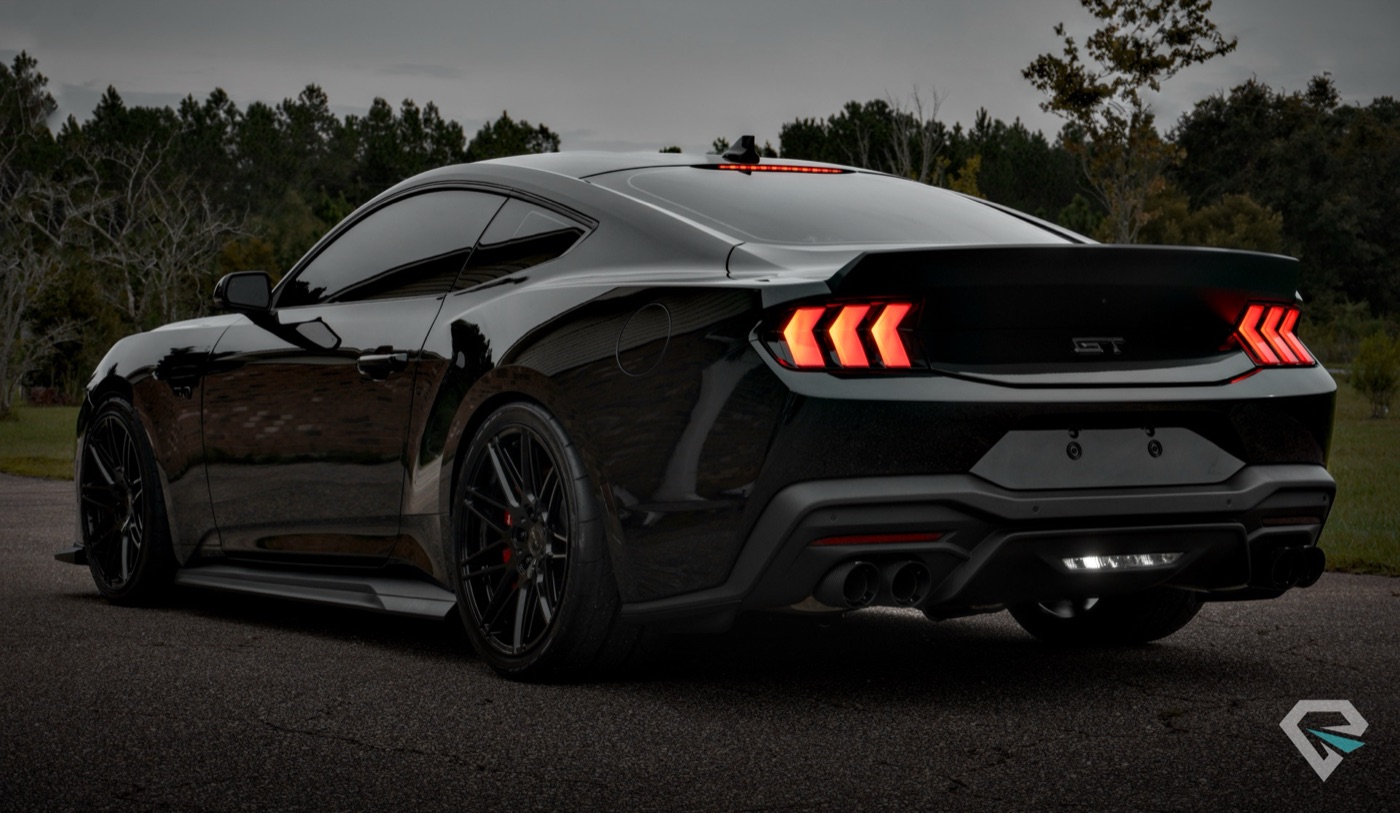
No single vehicle stands out to me here, because it is not rare. It is constant. Expensive, nearly new vehicles come through here with wash swirls all over them, and the paint is otherwise in great shape.
Plenty of those owners have no idea. They wanted the dirt off the car, the car got clean, and to them the job was done.
But the ones who do see it cannot unsee it. Once you have looked at your own hood in the sun without swirls in it, you start noticing them everywhere, on every vehicle you walk past.
That is the honest cost of knowing.
How to Actually Wash It at Home
There is more than one right way, and I want to push back on something first.
Social media will try to lead you down one specific path with a very long list of required gear. Most of that is ego stroking. It is people showing off a process, not people teaching you to protect your paint.
The most common safe method is the two bucket method. One bucket of soap, one of clean rinse water, and you rinse the mitt in the second bucket before it goes back into the soap so grit never rides back onto the paint.
You can also do a rinseless wash. You can even do a one bucket wash. Yes, one bucket. Technique and product quality carry more weight than the number of buckets on the driveway.
On products, keep it simple. If your vehicle is coated, use the wash soap from whoever made your coating and stop researching. There are a lot of genuinely good brands now. I use Armour Detail Supply in the shop.
One product to skip: car shampoo with wax in it. Not because it hurts anything, but because the wax in those soaps is low quality and it can mask a coating you already paid for, so you stop seeing what the coating is doing. It also is not a substitute for a real wax, sealant, or coating. I do not recommend it on any vehicle, coated or not.
And if your vehicle is already coated, the maintenance drops off a cliff in a good way. Customers are saving hours a month, not minutes.
You do not wax it. You use less product per wash. And you go longer between washes, because dirt is not bonding to the surface the way it does on bare clear coat.
That last one is worth sitting with. Fewer washes is the whole game, because every wash is a chance to put swirls in your paint. Cutting your washes in half cuts your risk in half, before you account for the surface being slicker when you do wash it.
Lovebugs Are the Local Version of This
Down here the wash question is tangled up with bugs, and this is where waiting costs you.
Bugs are acidic. Their remains are acidic. The longer they sit baking on your hood and mirrors in August, the more they etch into the paint, and etching means tiny craters in the clear coat. You usually cannot feel them with your finger unless it has gotten bad.
Light etching can be polished out. Deep etching is permanent scarring, and no amount of correction brings it back.
So during lovebug season the fast, gentle wash you do this evening beats the perfect wash you were planning for Saturday. That is true whether you are in Foley, on the island, or up the Eastern Shore. Add salt air and a UV index that stays high from March through October and paint down here simply has a harder job than paint in Birmingham.
If You Are Going to Use One Anyway
I will never tell somebody to run their vehicle through a tunnel wash. Especially not a coated one.
But I also live in the real world. Most people are busy, and the choice is often a tunnel wash or a genuinely filthy vehicle for another three weeks. So if you are going to do it: do not make it a routine, and pick touchless over anything with brushes.
Think of it like fast food. Once or twice is not going to hurt you. Make it a habit and the damage adds up, quietly, until one day you see your hood in the sun and wonder when that happened.
That is the whole answer. Not that you are a bad owner if you use one. Just that nothing about it is free.
If your paint already has years of wash swirls in it, that gets sorted out during the correction stage before any coating goes on, and you can see what each package covers or look at real customer vehicles we have finished. No stock photos, ever.
Not sure whether your paint is far enough gone to be worth it? Send me a photo in the sun and I will tell you honestly. Sometimes the answer is that you should keep your money and just change how you wash it.

Randy Matthews
Owner of Diamond Auto Care in Foley, Alabama. Applying ceramic coatings professionally since 2017, and personally installing every coating that leaves the shop. 4.9 stars across 98 Google reviews.